

Creative autism teaching approaches in practice
Published on 19 September 2025

At Sybil Elgar School we aim to bring lessons to life by following a creative approach to teaching. Getting to use their hands or bodies while learning makes a big difference in engagement for our autistic pupils and students.
What we mean by ‘creative’
The National Autistic Society (NAS) encourages schools to shape learning around each child. The SPELL framework fits well with this kind of teaching. In this context creativity is about encouraging our pupils and students to express themselves in a supportive environment, regardless of the lesson they are in. We may still face barriers, but when teachers bring imagination into lessons, children often engage and remember more.
Yasmeen, our Year 5 teacher, gave an example:
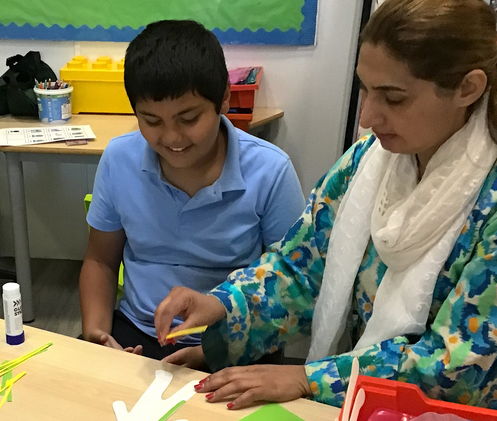
"This week, our students enjoyed a maths creative activity linked to our 'All About Me' topic, focusing on repeated sequence patterns. They designed special outfits for paper puppets, choosing two or three favourite colours."
Using coloured long and short strips, the children created simple stripe-repeated patterns, practicing sequencing, fine motor skills, and making choices that reflected their own likes. The finished puppets were colourful and showed how pattern making can be both mathematical and creative. Most importantly, the activity allowed students to express themselves in a fun, supportive, and hands-on way.
Why this creative approach to teaching Maths in an autism classroom works
- Instead of only writing patterns on paper, the students made paper puppet outfits. They did something physical to help them remember.
- The learning activity used cross-curricular links, connecting maths to personal choices like favourite colours and creating their own sequences
- It practices skills beyond maths, like fine motor, creativity and confidence, showing the wider benefits of experiential learning.
Looking ahead
The Ealing Families Directory has examples of creative SEND-specific activities and resources, both for classrooms, at home or in the wider community. It’s a great place to look for inspiration to keep learning engaging, active and fun, in and beyond the classroom.