

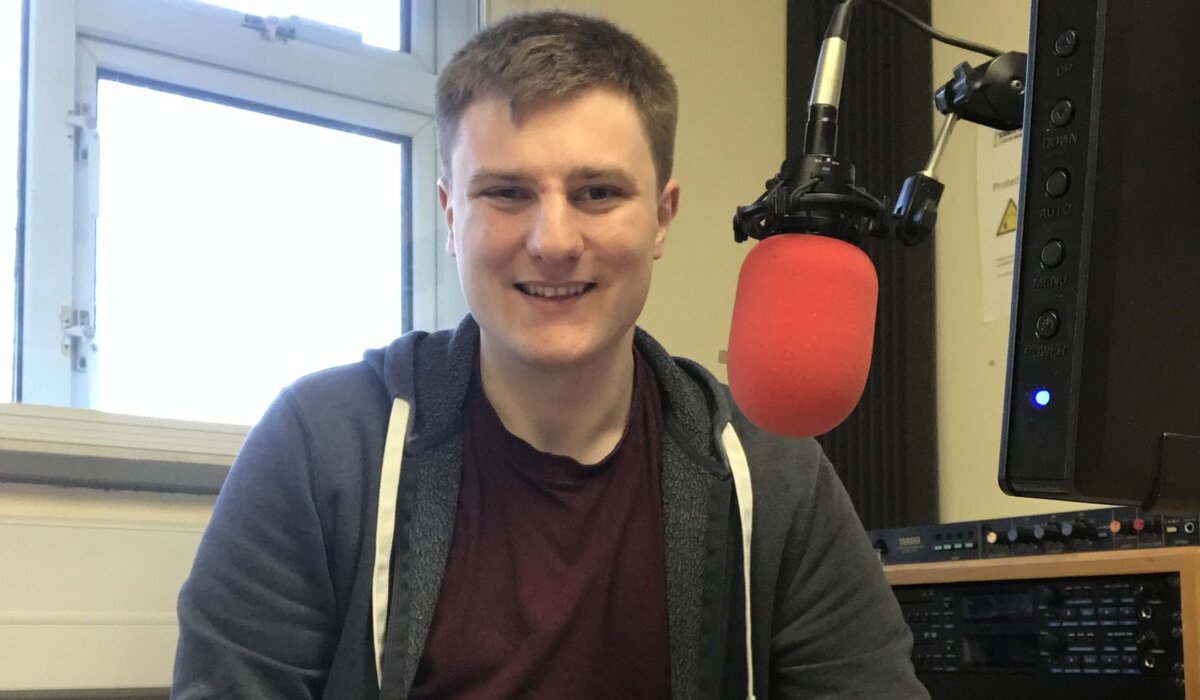
“To go to a place of safety where you’re told that you have something worth saying – that’s a wonderful feeling.”
Jamie
– on how he got his start in radio and what it means to be told you have something worth saying.
Jamie’s story was originally published in our Spring 2025 issue of Your Autism.
When did you first know or start to think you were autistic?
I’ve always known from a young age, but the full confirmation and understanding was when I was around 11 or 12. The specialist asked me afterwards: “Now you’ve got it all confirmed, how do you feel?”
I said: “Fine. I kind of always knew. Nothing’s changed.”
Could you tell us a bit about what you do?
I’ve been volunteering at Somer Valley FM for 12 years, and I’ve been doing my show there for almost 11 years.
The show is called Just a little bit random. Film is the focus, but every now and then, it’s just two hours of nonsense, with me rambling on and playing far too much Billy Joel.
I also help some of the students at the Sound Vision charity, which started from, and is linked to, Somer Valley FM.
Could you explain a bit about the Sound Vision charity and how you got started in radio?
Sound Vision’s tagline is ‘Empowering voices less heard’. It might be autistic people, disabled people or people who just feel they don’t have a voice.
Sound Vision is a way for people to grow skills related to radio that they can then adapt to other parts of life and forge into careers. For me, it’s about growing people’s confidence and making them realise that they do have something worth saying.
I got into the radio side of things well before the charity existed because of an open day at a school. It wasn’t some big, revelatory life decision. It was just: ‘Well, that sounds like something nice to do.’
Dom Chambers was the Station Manager at the time and is now the CEO of Sound Vision. He said: “You have this interest in film, so why don’t you talk about that to start with and do a feature around that?”
From there, I found myself going to film festivals, becoming a film journalist, introducing film screenings and writing for magazines and websites – all because of that initial point.
To go to a place of safety where you’re told that you have something worth saying – that’s a wonderful feeling to have.
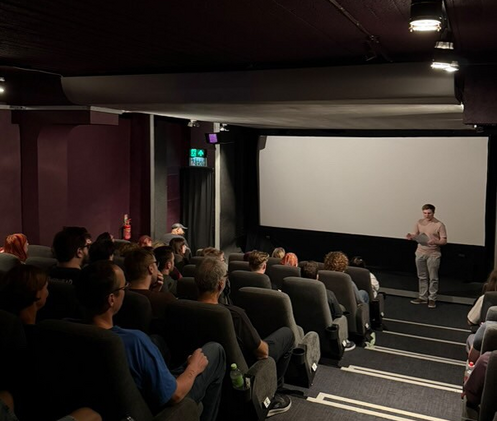
You performed in a showcase for Sound Vision. What was that like for you?
Anything I do, my mind will go to the worst-case scenario. In the build-up, I was absolutely bricking it constantly.
Then, when you’re in the moment, you’re not overly thinking about it because you’re focusing on what you’re doing. I was answering Dom’s questions rather than thinking about all the people there. I love the Paddington films, and I did name-drop them during the conversation with Dom.
One or two people came up to me afterwards. Someone just wanted to talk about the Paddington films, which really dimmed down that panic and worry about how I did.
The more I’ve done these things, the more it helps because you’re forming those skills and getting better. Sometimes, people just need that push.
What work have you done around mental health?
For the past couple of years, I've been doing a podcast called The mental health shelf. I invite guests to talk about five items or symbols which they believe have brought them joy, escape or have generally contributed to good mental health throughout their lives so far.
A lot of what comes up links to escapism, distraction, personal memories or having a physical outlet. Finding ways to perhaps understand or connect your emotions to something else – whether via a book or a film – that reminds you you're good at what you do and why you do it, or something that helps release what you might have been bottling up.
There are certain things that people have mentioned, not necessarily items but more points about their own attitudes and relationships to mental health, which I've taken away and have been useful.
What advice would you give to other autistic or neurodivergent people interested in working in radio or audio media?
If you’re looking for a way in, the community stations are great. Pretty much all community stations are presented and hosted by volunteers, who build up skills.
It can also help launch skills in other careers, not just radio.
What has been the long-term impact of being at Somer Valley FM? How do you feel about the future?
I went there as the quiet, autistic child who was too afraid to speak. Now, I’m that still slightly awkward autistic person who won’t shut up if you talk to him about films; I was on BBC Somerset talking about the Oscars.
I don’t think I’d have the confidence to do all the film screenings and festivals I do if it weren’t for Somer Valley FM and Sound Vision. My show, and all the interviews I do for podcasts, wouldn’t have come about if I hadn’t found that voice and been told that I have something that’s worth saying.
With this year’s theme of ‘access to services’, what message would you like to share with other autistic people for World Mental Health Day?
It's about knowing what helps you, no matter how small. What the outlets are that help you get through the day or a particular moment. That stops you from sitting and letting the noise in your mind get louder and possibly the better of you.
Sometimes, writing things down can help bring some order to the chaos in your head and make it a bit more understandable when reading it back, or you can just scribble.
Of course, talking to people around you about how you're feeling is a big help. It can be difficult to know what to say, particularly if you don't entirely know how to say what you're feeling.
Starting those conversations can be uncertain and scary. But I'm sure there are people around you who care about you and will listen if you need or want to talk about how you're feeling.
There are also plenty of mental health groups and services that can act as ways to remind yourself that you're not alone, act as a verbal outlet and potentially understand what you're feeling more. It's always worth looking up what's available near you or what services can help you depending on what you're feeling or your situation. It's always worth seeing what's available and what might help you and trying things out to see what outlets do and don't work for you.
It all comes back round to that idea that you're not alone. That can be a big help when your mind can sometimes make you feel as if you're isolated and unsure as to where to turn. In those moments, the spark that tells you you're not alone can help you on that push towards those known outlets, services and perhaps, even just a little bit, clearing the chaos in your mind and bringing some calm.
The National Autistic Society is here to help with our:
- advice and guidance
- Online Community
- local branches, day centres and social groups
- Parent to Parent Emotional Support Helpline
- Autism Services Directory
- volunteering
- training, e-learning and accreditation
- diagnostic and assessment services
- education and children’s services
- adult residential services.